The first ‘disaster’ people hear about when investigating the unethical labour practices adopted in the fashion industry tends to be the Rana Plaza Disaster in 2013. Located in the Savar Upazila of Dhaka District, Bangladesh, the disaster claimed the lives of 1,134 people and injured an estimated 2,500. This event is an example of the devastating consequences of neglecting worker safety and prioritising profit over ethical considerations, a trend seen in many countries with a large involvement in the garment industry.
What happened?
On April 24th, 2013, the Rana Plaza building suddenly collapsed, trapping thousands of workers inside. The building was an eight-story commercial building that housed several garment factories which provided products for various international brands including Primark, Walmart and Mango. The disaster unfolded in the early hours of the morning, with loud vibrations beginning at 8:54 am and the building completely collapsing at about 8:57 am, less than three minutes later. The scenes were disastrous — entire floors fell onto each other and crushed those inside.
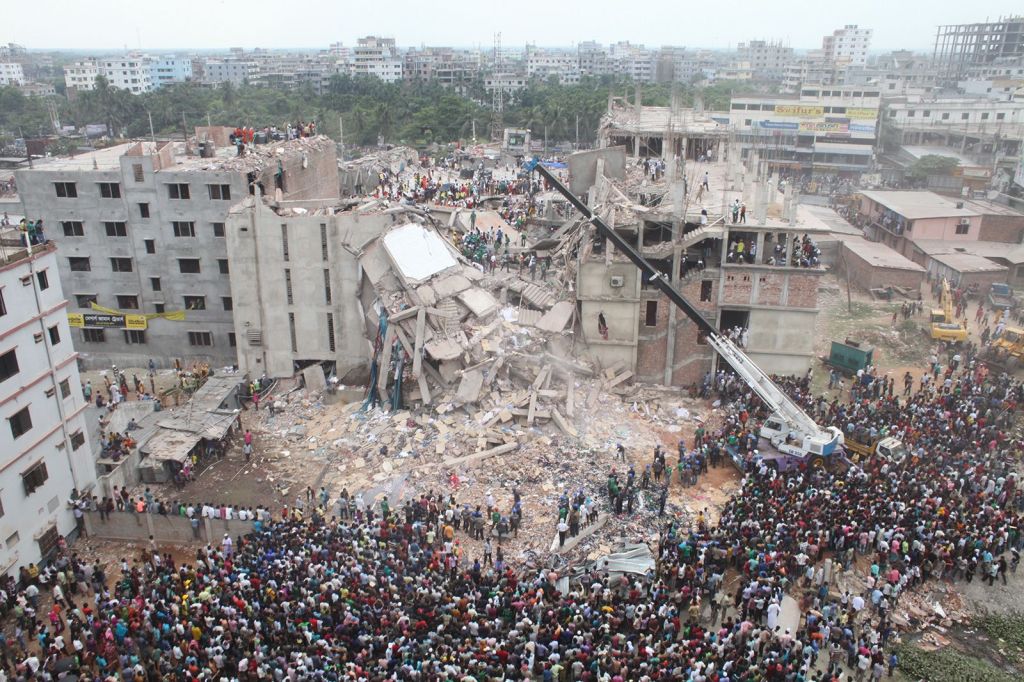
Although many died on immediate impact, there were many people trapped underneath the rubble. The instant aftermath of the collapse was therefore extremely chaotic. Local authorities quickly intervened, yet the rescue team greatly consisted of volunteers with a lack of trained emergency personnel. The operation was also hindered by the sheer scale of the devastation. There were efforts from the UN for an intervention, who had ruled that Bangladesh lacked the capabilities to carry out an effective rescue operation. However, this offer was rejected by the Bangladeshi government. Many argue that this was a way to ‘save face’, yet this risked and sacrificed many of the lives which were at risk, underscoring the failure of the government, even in a time of crisis, to respond effectively to the issues in the garment industry.
Why did it happen?
Firstly, the Rana Plaza building was not made to sustain factories. Structural issues, such as the fact that it was built on a filled-in pond, made it largely unsuitable for the use it had adopted up until its collapse. The building was also constructed with substandard materials and did not adhere to proper building regulations. The first five floors were legal, yet the top three were built without a permit. However, these structural issues were furthered by administrative failures. The day before the disaster, there were explosion-like sounds investigated by an engineer, who later found large cracks in the supporting columns. The shops and bank in the building were immediately closed, yet despite these clear indications, the owner of the building, Sohel Rana, and the other factory owners demanded their workers to come in the following day.
Although it is certain that the building’s administration held great responsibility in its collapse, it is important to acknowledge that this profit-driven attitude stems as a result of fast-fashion driven consumerism. The decision to send workers back to the factory came as a result of pressure to complete orders in time. This reflects the exploitative practices which are deeply rooted in the garment industry and signifies that change is needed.
Response
The rescue operations continued for weeks, and the scenes captured global attention. It was one of the worst disasters in industrial history and the disaster shocked the world, prompting an outpouring of calls for change.
In Bangladesh, there were efforts to improve building safety and working conditions. There was also the Accord on Fire and Building Safety in Bangladesh, which was established to ensure safer workplaces for garment workers. This was significant, as Bangladesh is a country rife with unethical working practices, especially in this industry.
There was an increased level of scrutiny internationally, and movements have developed calling for improved transparency and accountability from fashion brands. However, nearly 10 years on from the disaster, there is still much that must be done.
 Sydney's Blog
Leave a comment